
Deciding on the right telescopes for your customers can be a daunting task for distributors and retailers in the market for astronomy gear. In order to prevent slow moving inventory, most products have to sell within a matter of months. When choosing between refractors, reflectors, and catadioptric telescopes, each with their own strengths, a distributor or retailer has to decide which will be the best match for their customers and their bottom line.
This guide exposes the real differences between these two model types from a business standpoint. It covers topics such as performance, maintenance, durability as well as how these models are actually marketed/sold in today’s marketplace.
Whether someone is just starting out with astronomy and looking for something simple to begin with, or they are a serious enthusiast that can spend hours trying to spot the faintest galaxies in the night sky, there is definitely a type of telescope to suit them. The optical design that you stock will determine whether or not the telescope is right for any particular user.
Refractors are telescopes which use lenses to focus light. The light from objects passes straight through the front objective lens, which are the simplest of telescopes and so often the best to start with.
Many reflectors use mirrors. The light from objects in the sky hits the back of the main mirror, and then it bounces off of a second, smaller mirror before going through the eyepiece. Using a system of mirrors allows for large apertures to be built without the system becoming too heavy or too expensive.
Telescopes which use a combination of lenses and mirrors are called catadioptric telescopes. Within this class are designs such as Schmidt-Cassegrain telescopes and Maksutov telescopes. The light path is folded in such telescopes to allow for long focal lengths within a tube of limited length. Such telescopes are used for portability, but they have complex interior optics.
Here's how the three stack up in real-world use:
| Aspect | Refractor | Reflector | Catadioptric | Best For B2B Stocking |
| Image Sharpness | Excellent contrast, sharp details | Good but can show some coma at edges | Very good, balanced | Beginners & lunar/planetary viewing |
| Light Gathering | Strong for aperture size | Excellent for larger apertures | Good in compact form | Deep-sky vs. bright objects |
| Maintenance | Very low – sealed tube | Higher – mirrors need periodic cleaning | Moderate – needs occasional collimation | Retail channels with less support |
| Portability | Good for smaller models | Bulkier for big apertures | Most compact for power | Travel & grab-and-go buyers |
| Cost per Inch of Aperture | Higher | Lower | Mid-range | Value-conscious entry-level |
| Durability in Field | Tough against misalignment | Sensitive to bumps | Solid but more parts | Family & school programs |
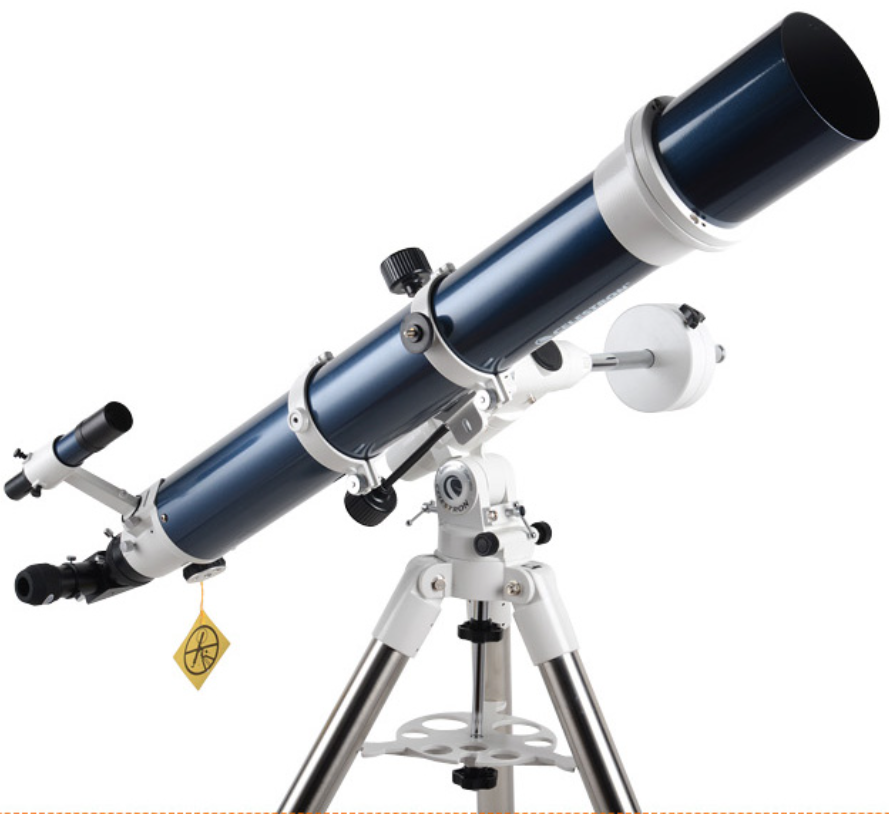
A refractor like the AS-TW02-102, with its 120mm aperture and 1000mm focal length, gives you that crisp, high-contrast view right out of the box. The f/8.3 ratio and quality coatings help cut light loss and boost clarity—perfect for spotting lunar craters, Jupiter's bands, or star clusters without much fuss.
Many B2B buyers in the astronomy retail market make the decision to purchase refractors very quickly for several reasons. The main reason is that they require almost no maintenance. There is no concern of a customer calling 6 months after purchase because the mirrors in the reflector style telescope need to be realigned after being driven around in a car. The sealed tube of a refractor telescope prevents dust from entering the optics and causes cleaning to occur less frequently.
The AS-TW02-102 120mm Refractor Telescope has a 120mm objective lens that gathers in plenty of light for great viewing of the Moon and the planets. Paired with a sturdy Omni CG-4 German Equatorial mount and stainless steel tripod it is very stable in breezy conditions. For the new telescope observer the telescope is very easy to set up and very soon they can be viewing all the details of the Moon as well as all the planets in our solar system without having to worry about collimation problems found in Reflector Telescopes.
A Reflector Telescope is a good option for customers seeking a larger aperture on a limited budget. While larger aperture Telescopes such as a 6 inch or 8 inch Reflector do better gather more light to view very faint deep sky objects, these Telescopes do require regular cleaning of the mirror as well as collimation. These two items are enough to scare off the casual buyer, leading to returns and angry customers.
Catadioptrics are in the middle of the spectrum of telescopes. They are very compact, very portable. They are ideal for people that travel a lot to dark-sky sites. The catadioptrics have more complex optics, therefore they are more expensive than refractors. Sometimes you have to realign them. So they do sell well to intermediate observers, but to beginners they sit on the shelf for a long time.
My experience stocking them is that refractors have the best sell-through in the entry-to-mid price range. People want a good view without all the aggravation associated with porkeys. As a result they get great reviews and less returns.
Think about your end users:
A retailer showed us a display of 120mm solid refractors on their shelves. He commented that he now fills more of his shelves with these type of telescopes as they have a marked reduction in returns. His customers can clearly see the rings of Saturn and can easily bring the image into sharp focus, leading to repeat purchases and word-of-mouth sales.
The durability of your telescope and accessories is as important as the image quality. This includes sturdy mounts, quality eyepieces and tripods. Additionally telescopes and binoculars also come with a range of accessories, such as moon filters and other eyepieces which can increase your average order value.
And think about your supply chain as well. Reliable manufacturers who normally do OEM/ODM can also put together bundles for your channels and add some phone adapters for the beginners who want to do astrophotography.
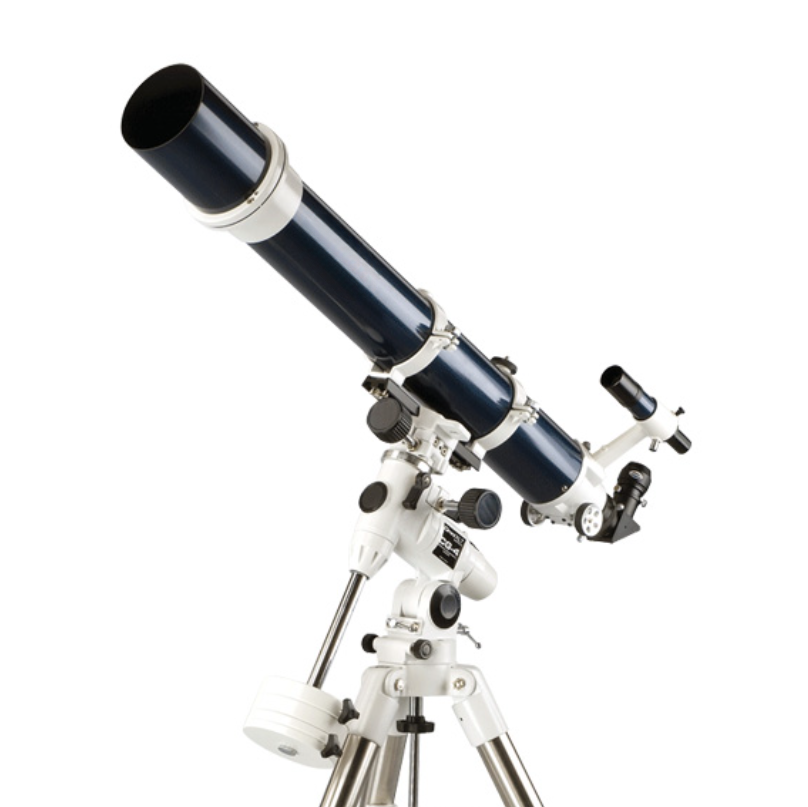
Hemusun Optical Instrument Co., Ltd. is an experienced optical products supplier of high quality telescopes and associated telescope equipment. The company specializes in the Research & Development, production of highest precision and optimal performance in the field of astronomy. An example of such a high-quality product is the AS-TW02-102 refractor telescope. The refractor has a large solid aperture, has multi-coated lenses to maximize light gathering, and a sturdy mount that can handle heavy use in the field.
They are able to deliver high quality solutions to both standard articles as well as custom made orders by implementing high technical expertise in the production of their astronomy equipment. This enables distributors to serve different markets and, thanks to the strict quality control from the glass to the final assembling of the tripod, ensure that their articles are always of high quality. The range of astronomy equipment from Hemusun is the ideal item for trade to offer to their customers. The articles are of high quality and are sold in a steady flow.
Choosing the right type of telescope to market depends on your customers and a balance between performance and practicality. For most retail outlets refractors give the best return on investment, offering users clear images and simple maintenance. Reflectors on the other hand have high power at low cost and are ideal for serious astronomy fans. Catadioptrics have the advantage of offering a lot of telescope in a small space.
Carrying a smart mix of the right equipment for your customers reduces your risk of holding inventory that does not get used. It also establishes your company as a supplier of quality gear that customers enjoy using. The astronomy market is a specialized one and people who are in it to make a living want you to succeed as well.
Refractors tend to be the most beginner-friendly. They offer sharp, high-contrast views with almost no maintenance, making them ideal for newcomers exploring the Moon, planets, and bright star clusters.
Reflectors usually give you more aperture for the money, which helps when viewing faint galaxies and nebulae. They require more care with mirror cleaning and alignment, so they suit users willing to learn those basics.
Yes. As traveling telescopes or “portable telescopes” they are the good all-rounder. A good combination of excellent telescope optics and portability at a higher price however which needs to be collimated from time to time.
Focus on your customer profile, expected maintenance levels, and long-term satisfaction. Refractors like the AS-TW02-102 often provide strong sell-through because they deliver clear views without frustrating setup issues.
The right designs lead to happier customers, fewer returns, and better reviews. This means faster inventory turnover and opportunities for add-on sales like eyepieces or filters.