Outdoor optical devices keep changing because the people who use them also change. Birdwatchers walk longer distances now. Hikers pack with more care. Field teams want quick facts without carrying yet another heavy tool. In 2026 these needs push the outdoor optics market toward two clear goals. One is lower weight. The other is useful digital help.
The shift is not just about making binoculars smaller or sticking a screen onto a monocular. Buyers look at clarity, grip, weather resistance, battery life, recording ability, and ease of use all at once. Devices that fit smoothly into a full day outdoors are winning. Products built around one flashy number are losing ground.
Portability has become a main buying point instead of a nice extra. A device can look great on a test bench. Yet it may stay at home if it feels heavy after two hours on a trail. People simply leave it behind when it becomes a burden.
A lighter binocular, monocular, spotting scope, or laser rangefinder is easier to keep close. This matters during short viewing moments. A bird may fly across an opening for only a few seconds. Wildlife can disappear behind brush just as fast. Compact roof-prism binoculars, one-hand monoculars, and smaller thermal devices meet this need well. They slide into jacket pockets and chest packs. They leave room for water and safety gear.
People who spend long hours outside notice the difference right away. They no longer have to decide between carrying optics or carrying comfort items. The lighter tools stay with them, ready for sudden chances to look.
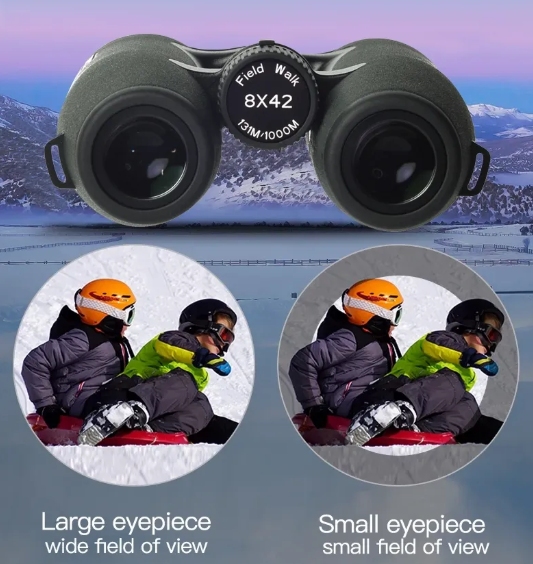
Small size brings trade-offs. A smaller objective lens gathers less light. High magnification can shrink the field of view. It can also make hand shake more obvious. Good lightweight optical devices handle these limits through better glass, careful alignment, multi-layer coatings, and balanced housings.
For daytime hiking and travel, 8x or 10x magnification with a 21–32 mm objective lens often works fine. In woodland, at dawn, or near sunset, a 42 mm objective can give a brighter image. The body will be larger, of course. Users must decide which trade-off fits their usual conditions. Many now choose the lighter option and accept a bit less brightness because they will actually carry the device every day.
Earlier smart optics often felt like regular products with extra electronics stuck on. Newer designs focus better. Digital features appear only where they solve a real field problem. The goal is simple help, not complexity.
Smart optical devices can join observation with recording, measurement, stabilization, or wireless transfer. Practical functions include:
These functions shorten the gap between seeing something and acting on it. Users can record a sighting, measure distance, or review a marked heat source without switching tools. The result feels natural rather than forced.
People who once carried separate cameras, rangefinders, and notebooks now find one device handles several jobs. This saves time and reduces the chance of missing a moment while digging for another tool.
A smart device must start quickly. It must stay easy to use with gloves or in low light. Crowded menus work poorly outdoors. Buyers now judge digital binoculars, night vision monoculars, and connected optical devices by boot time, button layout, display delay, charging options, and file handling.
A lighter body loses its value if it needs a large spare-battery kit. Efficient sensors and replaceable cells often add more value than a rarely used feature. Users want power that lasts through a full day without constant worry. Simple controls that work by touch, even with cold fingers, make a big difference in real use.
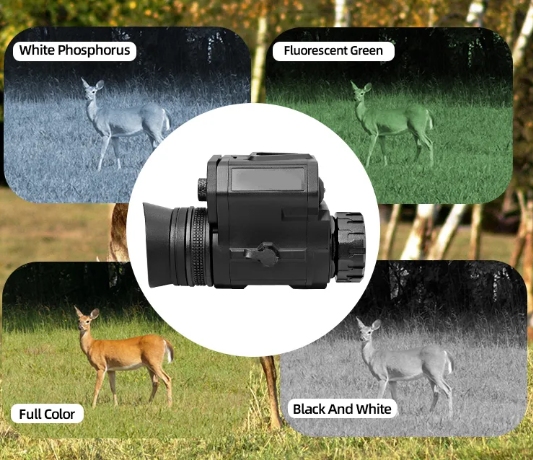
Digital night vision devices and thermal imaging devices are no longer limited to specialist teams. Smaller sensors and better displays have opened new uses. Wildlife observation, inspection, search work, camping, and low-light navigation all benefit.
Night vision uses available light or infrared illumination to create a recognizable scene. It helps users see paths, fences, branches, signs, and body shape. Thermal imaging reads temperature differences. It can reveal a person, animal, engine, or warm structure when visible detail is poor.
| Need | Better starting point | Main advantage | Common limit |
| Moving through a dark trail | Digital night vision | Familiar scene detail | Needs light or IR |
| Finding animals in brush | Thermal imaging monocular | Fast heat detection | Less surface detail |
| Checking a yard or building edge | Thermal imaging device | Works in total darkness | Hot backgrounds reduce contrast |
| Identifying a nearby object | Night vision device | Better shape and texture | Fog and glare may reduce clarity |
Thermal imaging is strong for detection. Night vision is often better for recognition and movement. Choice depends on distance, terrain, rules, and budget. Many users now carry both types for different parts of the same outing. Others pick one based on their most common need.
Resolution is only one measure of field performance. Thermal buyers should also compare pixel pitch, sensor sensitivity, lens size, refresh rate, display quality, startup time, and battery life. For digital night vision, infrared wavelength, screen brightness, recording quality, and image noise deserve equal attention.
A strong number on a product page may add little value at 5 a.m. in wet grass. Field performance comes from the complete optical and electronic system working together. Users who test devices in real conditions quickly learn which specs matter most for their work.
Growth comes from several user groups. Each group values portability and smart functions for different reasons. Understanding these differences helps manufacturers and buyers make better matches.
Birdwatchers favor wide fields, natural color, and close focus. Hikers want compact outdoor optics with simple controls and tough housings. Wildlife monitoring may call for a spotting scope, digital night vision, or a thermal imaging monocular with recording and tripod support. Rangefinders suit fast distance checks. Night inspection places more weight on startup speed, battery life, and weather resistance.
No single device is likely to lead the whole outdoor optics market. Application-specific designs usually serve users better. A tool made for birdwatching may feel awkward for long-range scanning. A thermal monocular built for detection may lack the detail needed for careful identification. Matching the tool to the main task remains the smartest approach.
The right choice begins with the viewing task. It does not begin with the largest number on a product page. Users who start with their real needs avoid costly mistakes.
Compare magnification, objective size, field of view, eye relief, close focus, coating quality, edge clarity, and focus feel. Eyeglass wearers need enough eye relief. High magnification may call for stabilization.
Outdoor optical devices face dust, rain, temperature changes, and repeated handling. A secure grip, sealed housing, protected controls, fog resistance, firm eyecups, and balanced weight improve daily use. These features matter as much as the pure optical numbers.
For smart optical devices, test the display, menus, recording, charging, software, and sensor response together. Buyers sourcing OEM optical devices should also ask about firmware changes, private-label housing, coating choices, sample approval, and batch-level quality checks. Consistent quality across large orders protects both the brand and the end user.
Hemusun Optical Instrument Co., Ltd. is a high-quality optical products supplier. It works across research, development, manufacturing, and sales. Its range covers binoculars, monoculars, spotting scopes, rangefinders, night vision, thermal imaging, astronomical optics, lenses, filters, prisms, windows, and sensor modules.
The company supports OEM and ODM projects from optical component processing through lens assembly. Production covers grinding, polishing, centering, coating, cementing, black coating, cleaning, assembly, inspection, and packaging. Nearly 5,000 lens types have been produced. Many front-line technicians have more than ten years of optical processing experience.
For outdoor brands and distributors, these capabilities connect optical design, mechanical fit, electronic integration, and repeatable production. ISO-based quality management, precision inspection equipment, certificates, patents, technical support, and after-sales service support the path from sample to commercial batch. This full-chain approach helps partners bring reliable products to market with fewer delays and fewer surprises.
The outdoor optics market trends of 2026 point toward products that are easier to carry, faster to operate, and better matched to the job. Lightweight binoculars remain valuable because they are more likely to be used. Smart optical devices are growing because recording, ranging, stabilization, and image processing save time in the field. Thermal imaging and digital night vision are expanding because they extend useful viewing beyond daylight.
The strongest products combine clear optics, sensible weight, reliable controls, durable construction, and practical electronics. Users who focus on these balanced qualities will find tools that serve them well for years.
The main trends include lightweight optical instruments, smaller size, advanced coatings, digital recordings, image stabilization, laser rangefinders, thermal imaging, night vision, wireless transmissions, and flexible customizations. All innovations have been made taking into account users' requirements instead of trying to impress them by new technology only.
Yes, lightweight binoculars are preferable for these purposes because they are easier to transport and faster to lift up when the object starts moving. 8x or 10x magnification is enough for almost all daytime observations. This type of binoculars has become very popular among hikers and bird watchers nowadays.
Questions to ask include optical design, coatings, waterproofing, quality control, sample approval, lot uniformity, software, housing, packaging, lead time, and post-sales service. Answers on these issues minimize the risks involved.