
Request
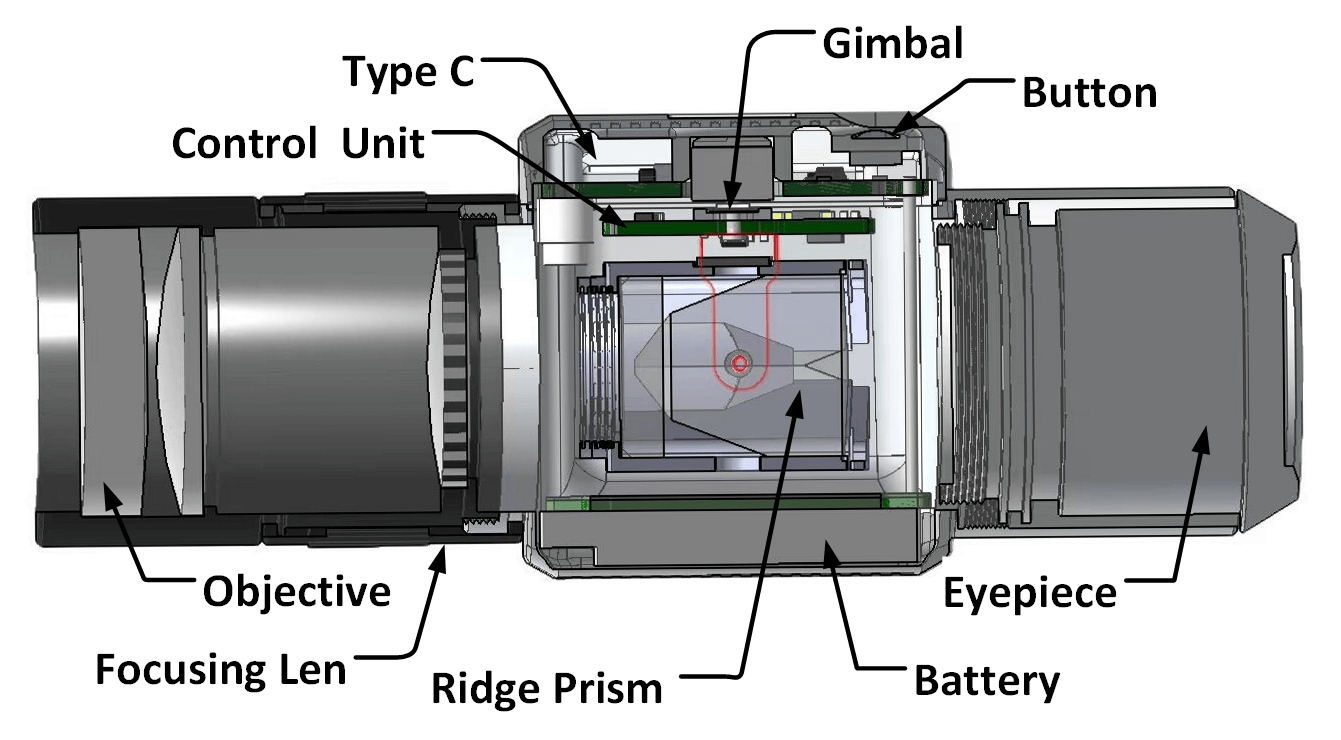
Handheld optics above 10x have one constant problem: the image never stays still. Image stabilized binoculars and stabilized monoculars exist to remove that variable. In this guide we break down why shake grows with magnification, how stabilization actually works inside the instrument, what the 12x33 stabilized 2-in-1 from Hemusun demonstrates in practice, and which specifications distributors and OEM buyers should lock down before placing an order.
The 12x33 stabilized cell phone lens and monocular 2-in-1 covered in this article is listed on the official product page: view the Anti-Shake Cell Phone Lens / Monocular 2-in-1 12x33 (Givite reference model GVQE-12x33).
Shake amplitude scales with magnification. A handheld device that drifts 1 or 2 degrees per second at 10x magnification shows that drift 20 times larger in the field of view at 20x. For binoculars, spotting scopes, and compact monoculars, this is why high-magnification observation is tiring and why the image feels busy even when the target is stationary.
Three design levers reduce the problem. First, optical quality: low-dispersion ED glass and dielectric or phase coatings keep the image stable and color-accurate when the system is working at its limits. Second, ergonomics: dual-speed focusing and a long eye relief shorten the adjustments the observer has to make while moving. Third, active stabilization: a sensor reads the motion, a correction system compensates it. The first two levers are in nearly every serious instrument. The third one is what separates image stabilized optics from the rest.
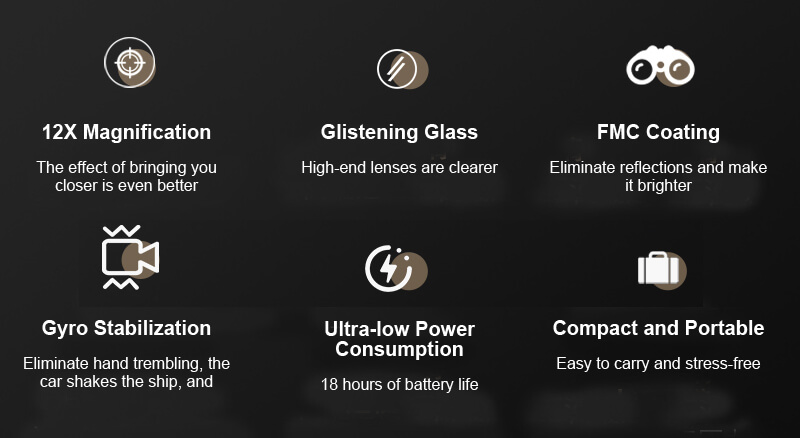
Active stabilization in hand-held optics follows a three-step loop. A gyroscope and sensor group read the motion of the device in real time. A smart control algorithm converts those readings into a correction signal. A correction stage then applies the opposite movement to the optical path, so the image stays steady while the body of the instrument keeps moving.
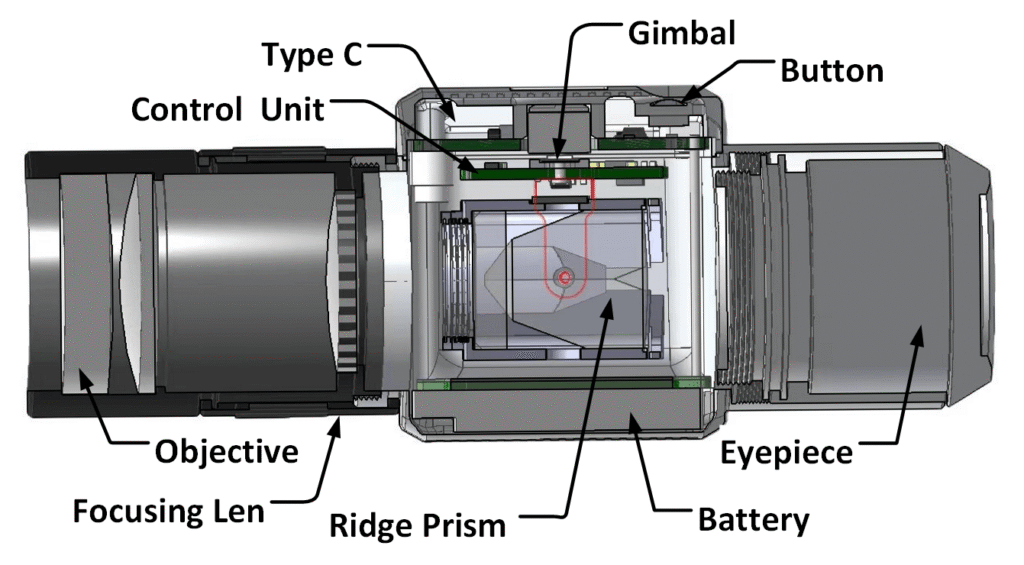
Hemusun built a near-focus stabilized image architecture for its 2-in-1 line: a compact prism group sits inside a small stabilized unit, which is what makes it possible to mount the stabilized unit on a phone as a telephoto lens while still working as a standalone high-magnification monocular. The same architecture logic applies across categories: monoculars, compact spotting setups, and stabilized binoculars for buyers who want a steadier picture without a tripod.
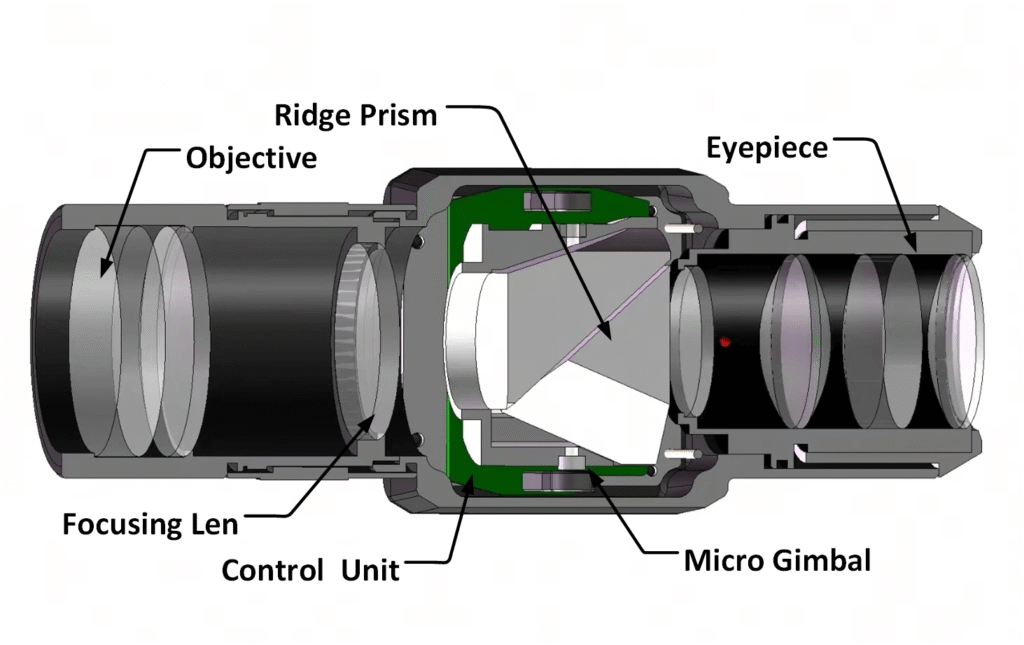
The 12x33 cell phone lens and monocular 2-in-1 is the clearest example of this architecture. It works in two modes: a 12x stabilized monocular for the field, and a stabilized optical telephoto attachment for a phone, so the same unit serves handheld observation and phone photography. Typical use cases include handheld, vehicle, boat and flight observation, outdoor events, birding, search and rescue, industrial observation, and security.
For buyers, the product is useful for two reasons. First, it proves the stabilization architecture at a price point and form factor that end customers accept. Second, the same design principles transfer to custom programs: gyroscope data, a smart control loop, and a compact optical train can be adapted to a distributor's own specification.
When you evaluate stabilized optics, the specification list is a negotiation between use case and budget. The parameters that usually decide the outcome:
Magnification and aperture: the higher the magnification, the more value stabilization adds. The 12x33 is one example in the stabilized 2-in-1 line; higher-magnification options such as 20x ED observation optics exist for fixed-station birding and range work, where a tripod is still the norm. ED glass: low-dispersion elements reduce color fringing, and it matters most at the high end of the magnification range. Coatings: dielectric or phase coatings on the prisms protect contrast. Dual-speed focusing and long eye relief: both reduce fatigue in longer sessions. Weight and battery: a stabilized unit carries electronics, so weight and runtime are part of the specification, not an afterthought.
Stabilization is not a replacement for a tripod. In strong wind or on a moving platform, a mechanical mount still wins. Specify both: a stabilized handheld unit for mobile work, and a tripod-ready configuration for static observation.
If your target market needs a stabilized configuration of its own, Hemusun handles custom optics design and production for OEM and ODM programs: see the custom devices and products page for what can be adapted, from the optical train to the enclosure.
A stabilized instrument is an optical and an electronic product at the same time, so the quality story has to cover both. Optical processing and coating are the first two checkpoints: the prism group, the ED elements, and the dielectric or phase coatings each need to pass inspection before the unit moves on. The electronics then get their own checks, because a gyroscope that reads correctly in the lab but drifts after a few hundred hours of use is a returns problem, not a feature. For a buyer, the questions that matter are which tests run at each stage, how many units are checked versus sampled, and what the after-sales path is when a field unit needs support. A manufacturer that can show the inspection and testing steps, and that stands behind the product with warranty and technical support after delivery, is the one that keeps a distributor's end customers coming back.
Hemusun is a dedicated optical instruments manufacturer covering research, development, manufacturing and sales, with OEM, ODM and custom design services. Production runs through optical processing and coating, with inspection and testing at each stage, backed by warranty, repair and technical support after delivery. The company holds ISO and CE certificates together with a software copyright patent, an independent appearance patent, and a utility model patent. MOQ varies by product; please contact us for details. Payment terms include T/T, L/C, D/P, D/A, credit card, PayPal and Western Union.
Stabilization changes what a handheld instrument can do: steadier images at high magnification, less observer fatigue, and the option to pair the optics with a phone for documentation. If you are buying image stabilized binoculars or a stabilized monocular for your market, specify the use case first, check the stabilization architecture and the optical specification second, and ask for a sample run before committing volume.
For specifications, samples, and OEM quotes, reach the Hemusun team directly: contact Hemusun at support@hemusun.com, or by WeChat and WhatsApp.
Yes, when the observation happens at 10x or above and the observer is moving: handheld, on a boat, in a vehicle, or at an event. At lower magnifications or on a tripod, the advantage is smaller. For birding and range work at 20x and above, a tripod-ready configuration is still the recommended setup.
No. Stabilization compensates for hand shake. In strong wind, on a moving platform, or during long static observation, a tripod or mount still provides the stability that no sensor loop can fully replace. Specify both.
MOQ varies by product and by configuration; please contact us for details for your specific requirement rather than relying on a single general figure.
Yes. OEM and ODM programs are part of the service: the gyroscope and smart control architecture, the optical train, and the enclosure can be adapted. Contact us with your target market and use case, and the engineering team will respond with a configuration proposal.