
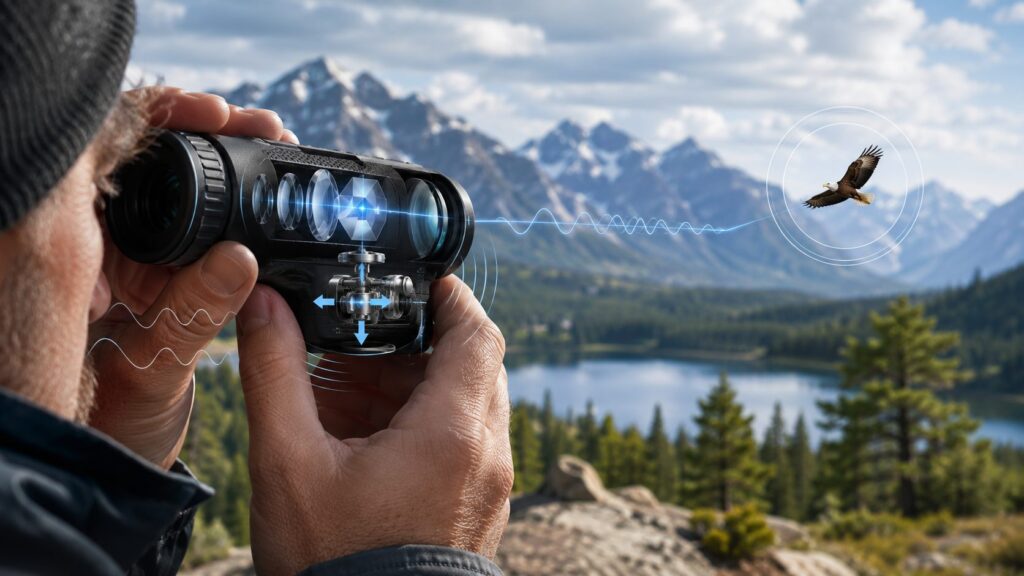
When you look at faraway objects, even a tiny shake from your hand can blur the picture. This issue grows bigger with strong magnification tools. It also happens during shooting with long lenses or in shaky spots like boats, cars, or rough outdoor areas.
An optical image stabilized monocular fixes this issue. It mixes classic lens design with smart motion sensing and steadying tech. Instead of just using bigger heavy lenses, these modern tools rely on clever parts to cut down shakes and keep the view clear.
This kind of tech has become very useful for people who love the outdoors, take photos, work in security, or need easy-to-carry optical gear that works well every time.
An optical image stabilized monocular is a small device for seeing things. It includes a special system that cuts down on image movement from hand shakes or outside motion.
Regular monoculars depend mostly on good lenses, zoom level, and how steady the user holds them. But when the zoom gets higher, even small body movements like breathing or slight hand wobbles get made larger too. The person watching might see the target jump around or find it hard to keep fine details sharp.
An image stabilized monocular solves this. It picks up movements and adjusts the inside optical parts right away. This gives a much steadier picture, particularly for distant targets.
People use these tools in many real situations, such as:
The mix of easy carrying and strong stabilization makes this optical tool great for anyone who wants to move around but still get clear views.
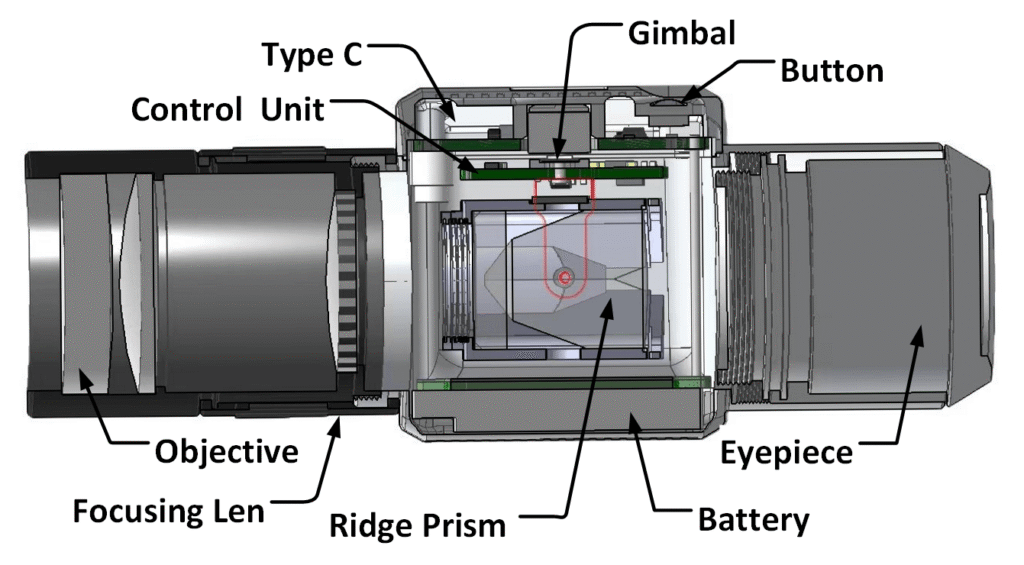
The way an optical image stabilized monocular works comes down to three main parts. These include motion detection, signal processing, and optical correction.
First, the device must find unwanted movements. Inside the optical image stabilized monocular, sensors spot small shifts in position or angle from hand tremors or outside vibrations. You see the same idea in high-end cameras where even little shakes hurt picture quality.
The stabilization setup gathers details about the motion. It notes things like:
For instance, if you stand outside and hold the monocular, your natural hand motion creates small but steady shakes. The sensors catch these changes fast and pass the data to the control unit.
Next, the system studies the information and figures out what fixes are needed. Smart stabilization tech uses step-by-step methods to decide exactly how much change to make. This lets the optical system react fast instead of counting only on the user to stay perfectly still.
This step matters a lot for high-magnification viewing. A tiny angle shift can move the target a great deal in the view.
The last part involves fixing the light path. The stabilization parts move certain optical elements to balance out the detected shakes. By lowering the effect of vibrations, the device keeps the image much steadier and lets users see more details clearly.
A modern anti-shake optical device often pairs a compact straight-view prism design with motion sensors and smart control methods. This setup helps reduce lens shakes. It boosts viewing steadiness and still keeps the whole tool light enough to carry easily.
Different people need different things from their optical tools. For many outdoor uses, being easy to carry matters just as much as clear performance.
A stabilized monocular offers several real benefits. Here is a quick comparison:
| Feature | Traditional Monocular | Image Stabilized Monocular |
| Image stability | Depends mainly on user control | Assisted by stabilization technology |
| High magnification viewing | More affected by hand movement | More comfortable for long-distance observation |
| Outdoor usability | Requires stable holding position | Suitable for dynamic environments |
| Portability | Usually lightweight | Lightweight with additional stabilization function |
Watching things far away needs both sharp optics and steady views. When you observe birds, animals, scenery, or other distant items, a shaky image makes it tough to pick out small details.
Image stabilization lets users hold a clearer sight without always fixing their body position.
Long viewing times can tire out your hands. A stabilization system lowers the impact of normal movements. This allows people to pay attention to the target rather than fighting constant shakes.
This helps in cases like:
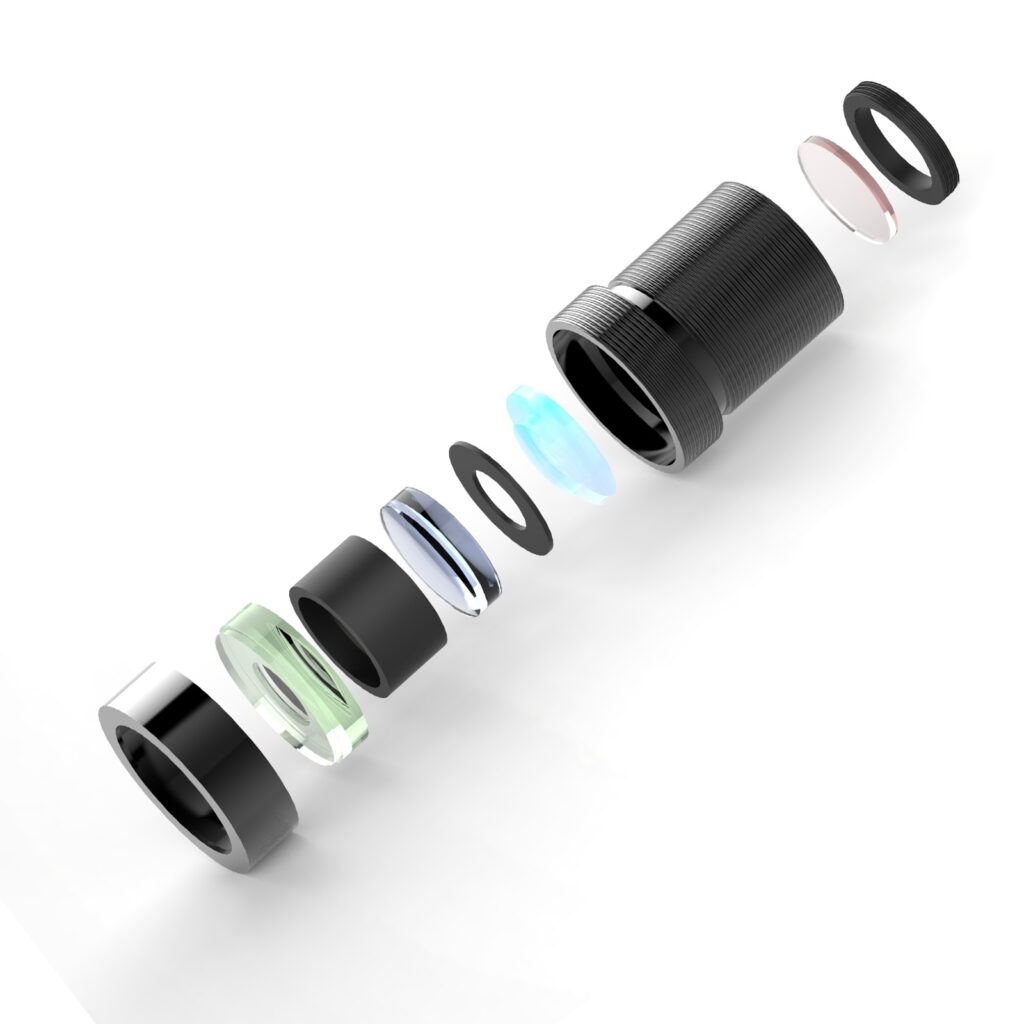
The need for small stabilized optical tools keeps growing. Users now want strong professional results in easy-to-carry packages.
People outdoors often face changing conditions. Wind, bumpy ground, and constant motion can disturb clear viewing.
A light stabilized monocular aids hikers, birdwatchers, and nature observers. They get sharper sights without dragging heavy gear along.
Some newer optical tools mix monocular viewing with phone camera options.
A stabilized optical lens helps phone users snap far subjects with better clarity. This proves handy for:
Certain small designs link long-range sight with phone use. They create a useful everyday tool for regular people.
In security work and factory checks, steady views are often required.
A portable stabilized optical device supports tasks such as:
The power to keep a calm image raises efficiency when quick and exact visual data is important.
Picking the right stabilized monocular depends on your planned use and needed performance.
Key factors include the following points.
Lens quality, magnification power, brightness level, and focus control all shape the final viewing experience.
High-quality glass parts and modern surface coatings can lift image contrast and sharpness in various light settings.
A solid stabilization system should react fast. It must cut unwanted motion without making the picture look strange or jumpy.
Important points to check are:
Many buyers pick monoculars because they are simpler to bring than bigger tools.
A compact build is very helpful for trips, hikes, and outdoor fun where every ounce counts.
For those into photography, phone connections add extra worth.
Some multi-use optical tools combine standard viewing, strong zoom, and close-up macro abilities. They give more choices for different needs.
Hemusun Optical Instrument Co., Ltd. focuses on the research, development, manufacturing, and sales of optical instruments. The company works hard to deliver high-quality optical products for many different fields. Strong R&D skills and precise manufacturing back this up.
Through ongoing work in optical tech, Hemusun creates items that blend useful design with dependable results. Their optical solutions reach into areas like scientific research, industrial manufacturing, medical diagnostics, environmental monitoring, and other expert fields.
The company uses modern production machines, careful optical processing, advanced coating methods, and tight quality checks during making. These steps keep products consistent. They also allow custom optical answers for varied customer needs.
For companies seeking an optical equipment supplier, Hemusun offers product development help, OEM/ODM team-ups, technical support, and solid after-sales service to match different market demands.
Optical image stabilized monocular technology marks a big step forward in portable optical gear. It brings together motion sensing, smart controls, and optical fixes. These tools deliver steadier views in tough settings.
Whether for outdoor watching, phone photography, professional checks, or special optical uses, stabilized monocular systems help people get clearer and more relaxed viewing results.
As more people look for light, multi-function, and trustworthy optical items, picking a skilled optical instrument maker with good engineering and production strength grows more important.
An optical image stabilized monocular is an optical device. It uses stabilization technology to reduce image shaking from hand movement or outside vibration. This gives a clearer viewing experience.
It detects movement through sensors. Then it processes motion data with control algorithms. Finally, it adjusts the optical system to compensate for vibration.
Yes. It is especially useful for hiking, bird watching, wildlife observation, and travel. The device improves image stability while keeping good portability.
Some optical devices support smartphone connection. They help users capture distant subjects with improved stability and clarity.
Businesses should evaluate optical quality, manufacturing capability, customization support, quality control systems, and after-sales service when selecting a supplier.