
A rangefinder answers one basic question. How far away is the target? Picking the right device is not always simple. A tool that works well on a bright golf course may act differently in woodland. It may also change on a hazy hillside or from a moving boat.
This rangefinder buying guide compares laser rangefinder and optical rangefinder technology. It looks at target size, working distance, weather, battery access, and measurement speed. Many laser devices still use an optical monocular or binocular body. So the measuring method and viewing system should be judged separately.
Both types estimate range. But they produce the result in different ways. One uses an emitted signal and electronic timing. The other relies on optical geometry, image alignment, or a calibrated scale.
A laser rangefinder sends a narrow light pulse toward a target. It measures the returning signal. A processor converts the travel time into distance. Then it shows the result on an internal display. Readings appear quickly. This matters when a flag, animal, vehicle, or building edge is visible for only a moment.
Modern electronic rangefinders may include scan mode. They can also have target priority, angle measurement, slope compensation, and vibration feedback. These functions suit golf, hunting, archery, hiking, forestry, and property checks. The speed helps users who need a quick answer in the field.
A traditional optical rangefinder uses geometry rather than a laser pulse. Coincidence and stereoscopic designs compare images viewed through separated optical paths. Reticle-based devices estimate distance from the apparent size of a target with known dimensions.
These instruments can work without batteries. The trade-off is slower measurement. Accuracy depends more on eyesight, target visibility, calibration, correct target dimensions, and user experience. Practice is needed to get steady results.
The main trade-off is automated speed versus battery-free simplicity. Neither type is ideal in every setting. Here is a clear comparison of the two.
| Feature | Laser Rangefinder | Traditional Optical Rangefinder |
| Measuring method | Time-of-flight laser signal | Triangulation, image alignment, or reticle |
| Reading speed | Usually near-instant | Slower and operator-dependent |
| Ease of use | Short learning curve | Practice is required |
| Power | Battery or rechargeable cell | Often battery-free |
| Angle data | Common on many devices | Usually manual or unavailable |
| Main limitation | Weak returns and bad weather | Visibility and operator judgment |
| Typical use | Fast field measurement | Navigation, training, observation, backup |
For most users, a laser rangefinder is the more convenient distance measuring tool. A traditional optical rangefinder still makes sense when approximate measurement and battery-free operation matter more than speed. Users who work in remote areas often keep an optical model as a backup. It gives peace of mind when power runs low.
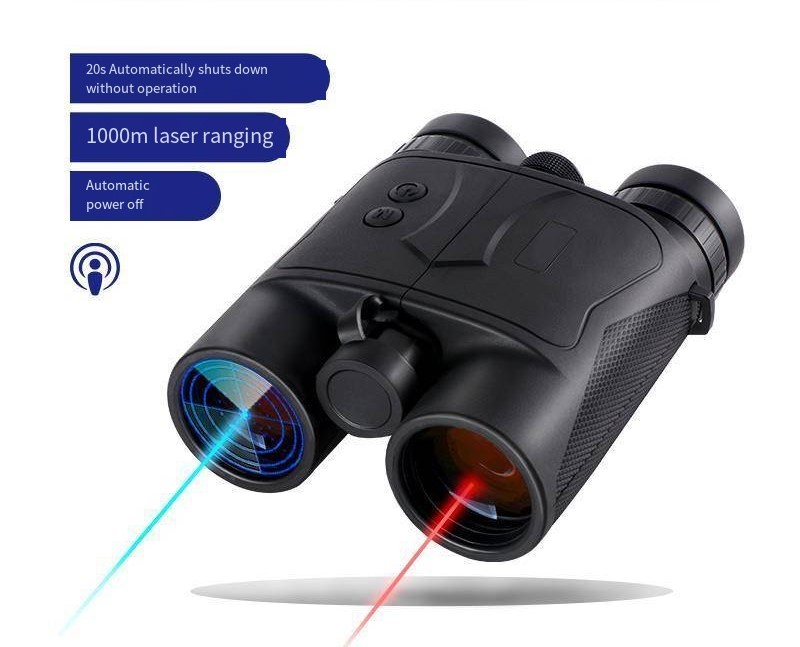
Maximum range is only one specification. A long range laser rangefinder may measure a large reflective wall much farther away than a dark tree, small flag, or animal. Buyers should judge the complete optical and electronic system. They should not look only at the largest number in a listing.
Start with normal working distance and target type. Golf users measure flags and green edges. Hunters range across sloped ground or through branches. Outdoor workers measure walls, poles, stockpiles, and landscape features.
Before buying, check these points:
Repeated, stable readings matter more than an impressive maximum. Useful test data states the target material and weather conditions. Real-world tests help more than paper claims. A device that works on a bright wall may struggle on a dark animal hide.
Magnification helps identify distant objects. But higher power is not always better. A narrow field of view makes a small or moving target harder to find. Moderate magnification with a bright, steady image can be faster than a powerful but shaky view.
Lens coating, light transmission, eye relief, focus adjustment, and display contrast affect daily use. The display should remain readable against shaded trees and bright ground. Good coatings reduce glare. Clear glass helps in low light. A comfortable eye relief keeps the view steady for longer sessions.
Line-of-sight distance is not always the useful number on steep ground. A rangefinder with angle measurement can show an adjusted horizontal or slope distance. This is valuable for golf practice, hunting, archery, forestry, and mountain work.
The mode should be easy to disable when rules require direct distance only. A clear interface should separate angle, horizontal distance, and straight-line distance. Many golf events ban slope functions during play. So a switch that turns the feature off is useful. Hunters and forest workers often keep the angle data on all the time.
A portable rangefinder should be quick to raise, aim, read, and store. Button position, grip shape, weight, focus control, and balance can affect target acquisition as much as raw specifications.
For outdoor use, look for sealed construction. Check for a protected battery compartment and a firm focus mechanism. Rechargeable power suits frequent use. Replaceable batteries suit long trips. A device that feels solid in the hand is easier to hold steady. Light weight helps on long hikes. A secure grip reduces drops in wet conditions.
Body style changes field use. Three formats cover most outdoor and procurement needs. Each has its own strengths. The right choice depends on how long the user will hold the device and what the main task is.
A compact monocular rangefinder combines magnified viewing and fast laser measurement in a small housing. It suits golf, hiking, property checks, and general outdoor use. Scan mode, target lock, angle measurement, and a clear display add value. It is easy to carry. Though the small body can be sensitive to hand movement at long distance. Many users find the pocket size ideal for everyday carry. The single-eye view is simple to learn. Yet steady hands still matter for distant targets.
Laser rangefinder binoculars provide a natural two-eye view for prolonged observation. They suit wildlife observation, marine use, guiding, and field teams that watch first and measure second. The larger body improves stability but adds weight. Prism alignment, coating, sealing, and ranging performance all matter. Two-eye viewing reduces eye strain during long watches. The extra mass helps keep the image steady without a tripod. Marine users often prefer this style because it works well on a moving deck.
Compass binoculars with a ranging reticle combine observation, direction finding, and estimated distance without depending on a laser. They can serve marine travel, navigation training, hiking, and battery-free backup.
The user must know the reticle and target dimensions. It should not replace a high accuracy laser rangefinder when a quick reading is critical. These tools teach basic skills. They also work when batteries fail. Many training programs still use them for that reason. The compass adds direction data that pure laser models may lack.
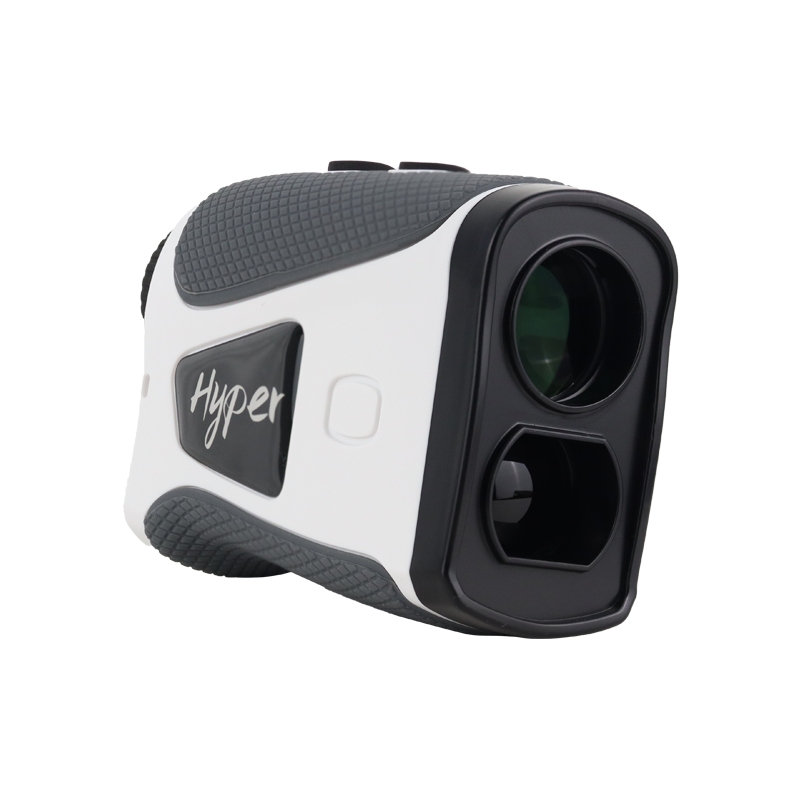
For golf, choose quick target confirmation, clear optics, flag priority, and optional slope measurement. For hunting or archery, give more weight to angle compensation, low-light clarity, weather resistance, and reliable readings on non-reflective targets.
A surveying rangefinder or professional rangefinder should be selected by tolerance, calibration, repeatability, mounting, data output, and environment. Certified equipment is more appropriate when results affect engineering, safety, or legal records.
Traditional optical rangefinders remain useful for education, navigation, and backup. For fast outdoor tasks, laser technology usually offers easier operation and more repeatable readings. Each application has its own needs. Matching the tool to the job saves time and reduces errors in the field.
Hemusun Optical Instrument Co., Ltd. develops and manufactures optical and optoelectronic products for observation and measurement. These include monoculars, binoculars, spotting scopes, rangefinders, night vision devices, telescopes, lenses, filters, microscopes, and optical components.
The company supports OEM, ODM, wholesale, and customized projects. Production capabilities cover optical design, grinding, polishing, centering, coating, bonding, cleaning, assembly, testing, and final inspection. Custom development also includes compact laser measurement chips and modules for one-, two-, and three-dimensional sensing.
For distributors and equipment brands, this mix of finished devices and component manufacturing can shorten development. Optical specifications, housing, electronic functions, branding, packaging, and quality requirements can be handled with one optical products supplier. Working with a single source often reduces delays and keeps quality consistent across batches.
The laser rangefinder vs optical rangefinder decision should begin with the task. Laser models are faster, easier to learn, and better suited to repeated distance checks. Traditional optical models offer battery-free simplicity but demand more time and skill.
The best rangefinder is the one that can acquire the real target, return a stable reading, and remain comfortable in the field. Range, optics, angle functions, display quality, handling, and weather performance should be judged together. Users who test devices under real conditions make better choices. A tool that feels right in the hand and works on the actual targets will serve longer and better.
For most handheld field tasks, a laser rangefinder gives faster and more repeatable readings. Traditional optical accuracy depends more on image alignment, target visibility, instrument design, and operator experience. Practice improves optical results, yet laser devices still lead in speed and consistency for everyday outdoor work.
A golf rangefinder should provide quick readings, clear magnification, target priority, and simple controls. Slope measurement is useful for practice when it can be disabled for events that require direct distance only. Flag lock and scan modes help on busy courses. A bright display that stays readable in full sun is also important.
Ask for measurement range by target type, accuracy tolerance, optical specifications, operating temperature, water resistance, battery details, quality-control steps, customization options, packaging, warranty terms, and sample-testing procedures before placing a volume order. Clear answers on these points help avoid surprises later. Requesting real test data on dark targets and in bad weather is especially useful.