
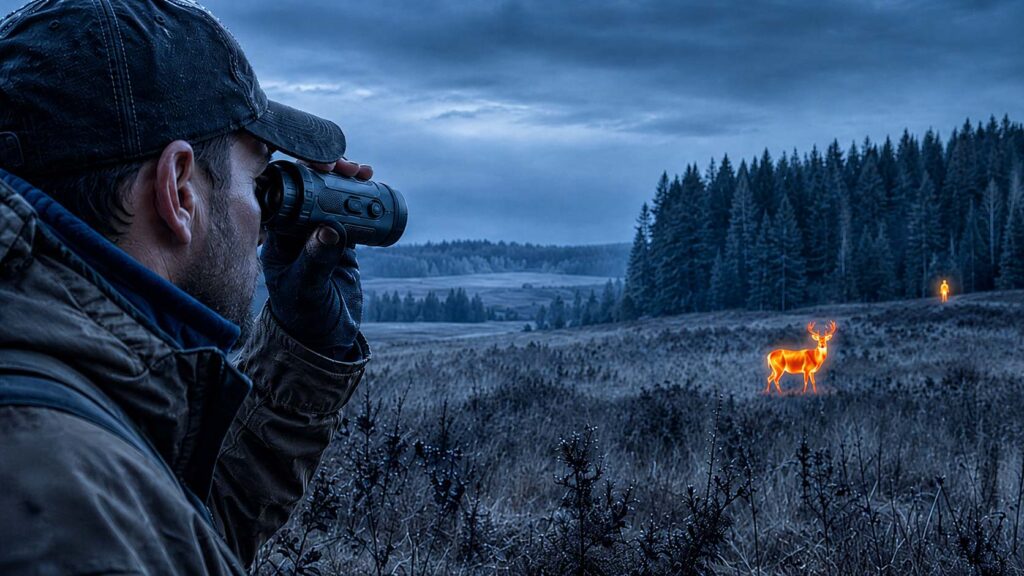
A thermal monocular looks simple. A compact device with an eyepiece, front lens and some push buttons. However, things change quickly as soon as you compare devices with 256×192, 384×288 or 640×512 thermal sensor resolution. The price difference is often large, however the difference in image quality is not only more clear. It also affects the range in which you are comfortable to scan, the digital zoom quality, the ability to recognize targets and last but not least the way you can market the product to e.g. hunters, patrol units, rescue teams, farmers that do checks on their property from time to time or to outdoor retailers.
Job before spec: choose the best tool for the job instead of the largest number.
Sensor resolution refers to the number of heat detecting pixels on the infrared detector. A 256×192 sensor has 49,152 pixels, a 384×288 sensor has 110,592 pixels and a 640×512 sensor has 327,680 pixels.
The pixel count of the thermal imaging camera’s display affects the images captured by the thermal imaging sensor before they are displayed. The only way to view images in greater detail is with a higher resolution display, which can be more comfortable to view. However, the display cannot add information that the sensor did not capture regarding the heat from objects in a scene.
In real use, sensor resolution affects four things:
Resolution is important but other factors like NETD, lens size, pixel pitch, refresh rate, display type, software processing and build quality also play role.
The three most common types of distance sensors are used by different buyers. There are four criteria to decide which one to use: distance, size of target, budget, and task.
| Sensor resolution | Best fit | Main strength | Main limit |
| 256×192 | Entry handheld thermal monocular, hiking, farm checks | Lower cost, compact body, simple use | Limited detail and weaker digital zoom |
| 384×288 | Outdoor use, patrol, hunting, search and rescue, distributor stock | Strong balance of image detail and price | Not as sharp for long-range identification |
| 640×512 | Professional thermal monocular, long-range observation, premium projects | High detail, better zoom, stronger recognition | Higher cost and often higher battery demand |
A 256×192 thermal monocular is a practical first thermal device for users who need to find heat sources at closer distance. It fits small farms, campsites, hiking routes, warehouse perimeters, basic law enforcement support, and short-range wildlife checks.
This is not a scanner that will give strong identification at long range. Warm objects will show up as a warm patch but have no definition. Because you are working with a small target the outline may look blocky. Digital zoom is not very effective because you are starting with a low pixel image. For very budget conscious retail channels this would be a close range scanner.
Useful features in this class include a built-in rechargeable battery, Type-C charging, Wi-Fi hotspot support, hot spot tracking, and around 8 hours of runtime. These details often matter more to first-time users than extreme magnification claims.
384×288 appears to be the safest thermal monocular resolution for many B2B buyers as it provides over double the number of pixels of a 256×192 thermal monocular and generally fits within a price point for outdoor stores, security gear distributors and private label projects.
A 384×288 thermal monocular is typically used for patrol work, hunting observation, large-property scanning and rescue. It provides a clearer delineation of objects and holds more usable detail when panning across fields, tree lines and roads etc. Combined with a 50Hz refresh rate this also makes for smooth tracking of animals and humans in motion.
Our class of thermal imaging monoculars is flexible enough to be held in your hand, mounted on your helmet or integrated into your scope. For distributors who wish to put one category of thermal imaging monoculars on the shelf to cover the widest possible customer base, the 384×288 thermal core is typically the practical choice.
For customers who require more than detection, FLIR’s 640×512 thermal sensors provide users with Recognition, Long-Range Capability and Clean Image Detail in complex environments.
Looking across scanning open fields, roads, coastal areas, industrial facilities, and large security areas the increased number of pixels translates into easier reading of people partially concealed by foliage, of small animals in the vicinity of fences and of heat sources from distant vehicles. In addition the digital zoom function remains useable because there is more original image information that can be magnified.
Additional support for a professional 640×512 thermal monocular is provided by the following hardware features: longer focal length, 12μm pixel size, manual focus, OLED display, picture-in-picture, hot spot tracking, recording, built-in storage, removable batteries, IP66 protection, and operating temperature range.
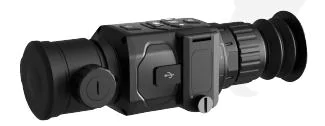
Resolutions are the first filter. Lower resolution images with high sensitivity and good optics can beat higher resolution images with poor processing and a bad lens.
NETD is a measure of how well a detector can perceive small changes in temperature. This can be as important as resolution in providing contrast in warm night time scenes, through fog, in wet forest environments and other low contrast situations. For search and rescue and security patrol missions, this may be as important as the resolution.
A 12μm pixel pitch allows for very compact design and even finer image resolution. The size of the lens influences the range and field of view. With a 30mm objective lens most handheld thermal imaging cameras reach a good balance. Longer focal lengths are useful for very long range observation but reduce the field of view.
A 50Hz thermal monocular is more comfortable to use than a slower device, for example when panning or tracking fast moving objects. AMOLED, OLED and LCOS are all used in thermal imaging, the important thing is that the display is clear, comfortable and matched to the sensor. Also important is the battery life, for night time patrols, camping, search and rescue and long observation situations.
Most thermal monocular procurement failures occur because buyers focus on numbers while failing to test the device outside. All of the following errors can be easily avoided.
The phrase ‘detects up to 1,000 meters’ can be very impressive to read. However, in reality this does not necessarily mean you can see a person, animal or even a vehicle at that distance. If you are serious about buying a serious piece of software then it would be wise to ask the seller for test images, samples of weather conditions, lens data and even real life use cases.
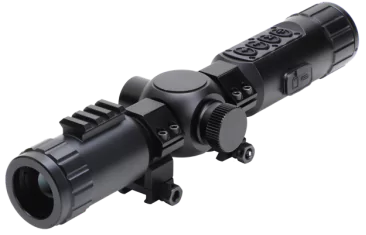
A Hiking Customer requires a product that is lightweight and easy to carry around and that can be rapidly scanned. A Ranch Owner requires a wide area search capability at night. A Security Team requires a product that can be easily tracked and works all the time in rain or dust. A Rescue Team requires heat contrast in very poor visibility. A Distributor requires a line of products that reduces returns and fits into several different price points.
As an entry retail product a compact handheld 256×192 thermal monocular makes a great door way product. For sustained sales and use a 384×288 resolution is the sweet spot. For higher end customers for long range observation and for serious professional work a 640×512 provides a better value for the extra cost.
Hemusun Optical Instrument Co., Ltd. is a high-quality supplier of optical products that specializes in Research & Development, manufacturing and sales of outdoor optronics and optical instruments. Outdoor products such as binoculars, monoculars, spotting scopes, rangefinders and night vision, as well as astronomical telescopes, lenses, filters, microscopes, magnifiers, optical components and custom optical instruments are manufactured and offered by the company.
B2B customers get more from the company than just finished products for the end customer. OEM, ODM, wholesale, retail as well as custom optical services enable distributors to offer a range of products to their market. The processes involved in creating a product for the end customer start with design and purchasing of raw materials and continue through cutting, grinding, polishing, coating, assembly and commissioning. Quality control during production as well as a final check before packaging are also part of the process. The company is also able to manufacture custom optical components for applications such as infrared night vision, laser systems, environmental monitoring, medical devices as well as aerospace and industrial machines.
At Hemusun we are happy to be your supplier for high quality optical products and for customized thermal imaging solutions and we shall do our best to support you in any project.
There is a real difference between 256×192, 384×288 and 640×512 thermal imaging sensors. 256×192 thermal imaging sensors for monoculars are for close-range scanning. 384×288 is best for outdoor, hunting, patrol and B2B resale applications. 640×512 thermal imaging sensors are best for long-range recognition, better digital zoom and professional thermal imaging images with lots of detail.
Simple buying rule: Check out the scene first, then go step by step through resolution, NETD, lens, refresh rate, display, battery, protection, supplier.
256×192 pixels is good enough for close-up scanning, hiking, farm checks etc. It’s an entry level to outdoor work. Not so good for long distance objects or heavy digital zoom.
384×288 is a good size for a lot of Hunting / Wildlife observation at medium range. 640×512 is better for users who want more detail for cleaner zoom and better recognition over open terrain.
No. The display resolution is just affecting how you are viewing the same image with your eye. The resolution of the thermal sensor is affecting how much information of the heat is actually being captured in the first place.
Distributors would typically ask for the following details for a product that they would resell: Sensor resolution, NETD, Pixel pitch, Lens size, Refresh rate, Display type, Battery runtime, IP rating, Operating temperature, Sample images, Can it be made as OEM product or ODM product, Warranty terms, Lead time.
384×288 typically serves as the goldilocks size for 3D model viewing for most B2B product lines – it’s the most cost effective resolution with great images and a large enough user base to matter while offering 256×192 and 640×512 for the lower end and high end of customers interested in viewing 3D models of products they sell.