
A lens might have the correct focal range. It could feature a sturdy housing and a clear optical setup. Yet it can still create dull contrast, clear flare, and faded highlights. Often, the key missing part is not the lens design. Instead, it is the coating on each glass surface.
Optical lens coating stands where basic physics meets real image results. It influences how much light gets into the setup. It also controls how much light bounces away. Plus, it manages how much unwanted light moves around inside the lens group. This is why lens coating counts for cameras. It also applies to smartphone lenses, monoculars, spotting scopes, telescopes, and other tools used in actual outdoor settings. Hemusun’s product line covers these areas. That includes mobile lenses and filters, monoculars, spotting scopes, telescopes, rangefinders, microscopes, and custom optical parts. So, coating performance plays a role in both everyday consumer items and OEM projects.
Before we check image problems, it is useful to explain what coating does in an optical setup.
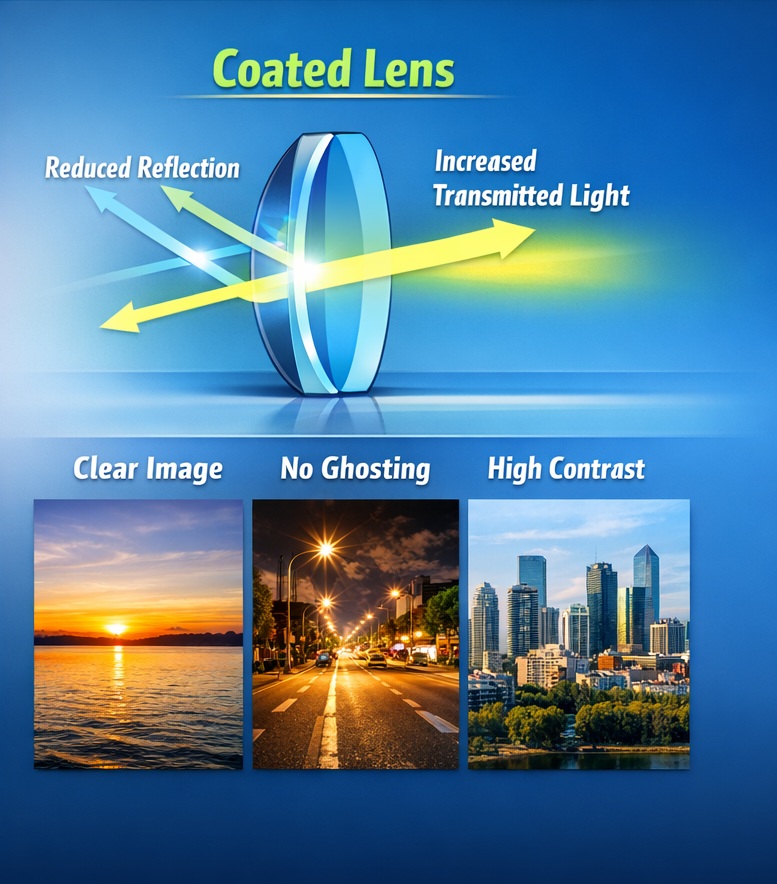
Optical lens coating means a thin film, or a few thin films, placed on the lens surface. This changes how light acts when it strikes the glass. Without any coating, each spot where air meets glass sends back some of the light that arrives. In a basic setup, that might not seem like a big deal. But in a lens with many parts, those tiny reflections add up quickly. They lead to lower light passage, more glare, more ghosting, and poorer contrast. So, anti-reflection coatings work to cut those issues. They boost the amount of light that travels through the optical path.
In everyday terms, a coated optical lens tends to appear brighter. It looks cleaner too. And it stays more steady in different light conditions. For mobile photos and small viewing devices, this improvement stands out. That is because such systems have little space to mask stray light.
The story of coating begins with light reflection at the glass surface.
When light shifts from air to glass, some of it passes through. But part of it reflects back. That reflected bit causes surface loss. A single-layer anti-reflective coating can lower that reflection for a specific color of light. A multi coating lens uses multiple layers. Each has different light-bending traits. As a result, reflection decreases over a larger range of the light spectrum we see. New tech reports point out that a single-layer MgF2 coating can drop glass reflection from about 4% to roughly 1%. Advanced anti-reflective setups can even lift visible light passage over 99% in certain cases.
This basic science leads to real image improvements in four key ways:
In setups with lots of light-passing parts, AR coatings gain importance. Every added surface offers another spot for reflection and ghost images. This explains why coated optics matter a lot in long light paths. It also helps in systems used in dim light.
Not all coatings serve the same purpose. Some focus mainly on image results. Others add toughness for regular handling.
This main optical layer cuts surface reflections and boosts lens light passage. It stands as the top coating for image results. That is because it directly impacts glare, ghosting, contrast, and brightness. In bright backlighting, AR coating often makes the difference. It turns a hazy image into one that works well.
A multi coating lens adds several anti-reflective layers instead of just one. The aim is wider control over light colors and steadier work under various light directions. This proves helpful in wide-angle optics. It also aids smartphone lens modules and small telephoto systems. In those, light strikes surfaces from odd angles.
A tough top layer guards the lens surface from cleaning scratches and normal wear. It does not take the place of solid optical coating. However, it keeps performance steady over time. Scratches and tiny damage can scatter light too.
These layers keep water, fingerprints, and skin oil away from the surface. For smartphone lens add-ons and outdoor optics, this directly aids image results. A dirty front part can add extra flare and drop contrast.
This stays out of sight for most buyers. Yet it holds great value in making products. Inner blackening and managed edge work soak up stray light. They stop it from reaching the image path. In custom optical tasks, this can matter as much as the front surface coating.
A simple chart shows how each layer adds value.
Coating type | Main function | Visible effect on image |
|---|---|---|
AR coating | Reduce reflection | Brighter image, less glare |
Multi-layer coating | Broader reflection control | Better contrast and color consistency |
Hard coating | Improve surface durability | More stable long-term clarity |
Hydrophobic / anti-smudge | Resist water and oil | Cleaner image in daily use |
Black coating | Suppress stray internal light | Lower flare and ghosting |
With the basics of coating in mind, we can now look at the real results users notice.
When less light gets sent away, more light arrives at the sensor or eye. This is why coated optics often seem brighter. The lens size does not change. In dim light for viewing, early morning sights, night photos, or indoor mobile shots, the extra useful light shows up clearly.
Flare shows when bright light spreads through the system. It raises the dark parts of the image. Ghosting occurs when bounced light creates odd shapes or bright spots. Solid lens coating cuts both. It stops reflected light from jumping between parts. Photo experts often tie multi-coated surfaces to less veiling flare. They also link it to clearer images with light behind the subject.
Sharpness goes beyond just detail capture. A lens might pick up fine points. But it can still seem fuzzy if flare weakens small contrasts. This is why coated lenses often look sharper in real outdoor tests. They prevent blacks from going gray. And they hold the difference between close textures.
Unwanted reflection does more than cut brightness. It also adds haze to the image. This makes colors seem weaker or dirtier. Stronger coatings aid true color match. They create a more natural image. This works best when the lens design already handles light twists well.
The chart below ties coating work to common user gripes.
Image issue | What often causes it | How coating helps |
|---|---|---|
Washed-out contrast | Stray internal reflections | Cuts veiling flare |
Bright ghost shapes | Surface reflection between elements | Reduces ghost paths |
Weak low-light brightness | Reflection loss at each surface | Raises transmission |
Dirty-looking highlights | Smudges and scattered light | Helps keep front element clean |
Flat color | Haze from uncontrolled light | Improves image purity |
The core idea of coating fits all optical types. However, the main challenges vary by how the lens is used.
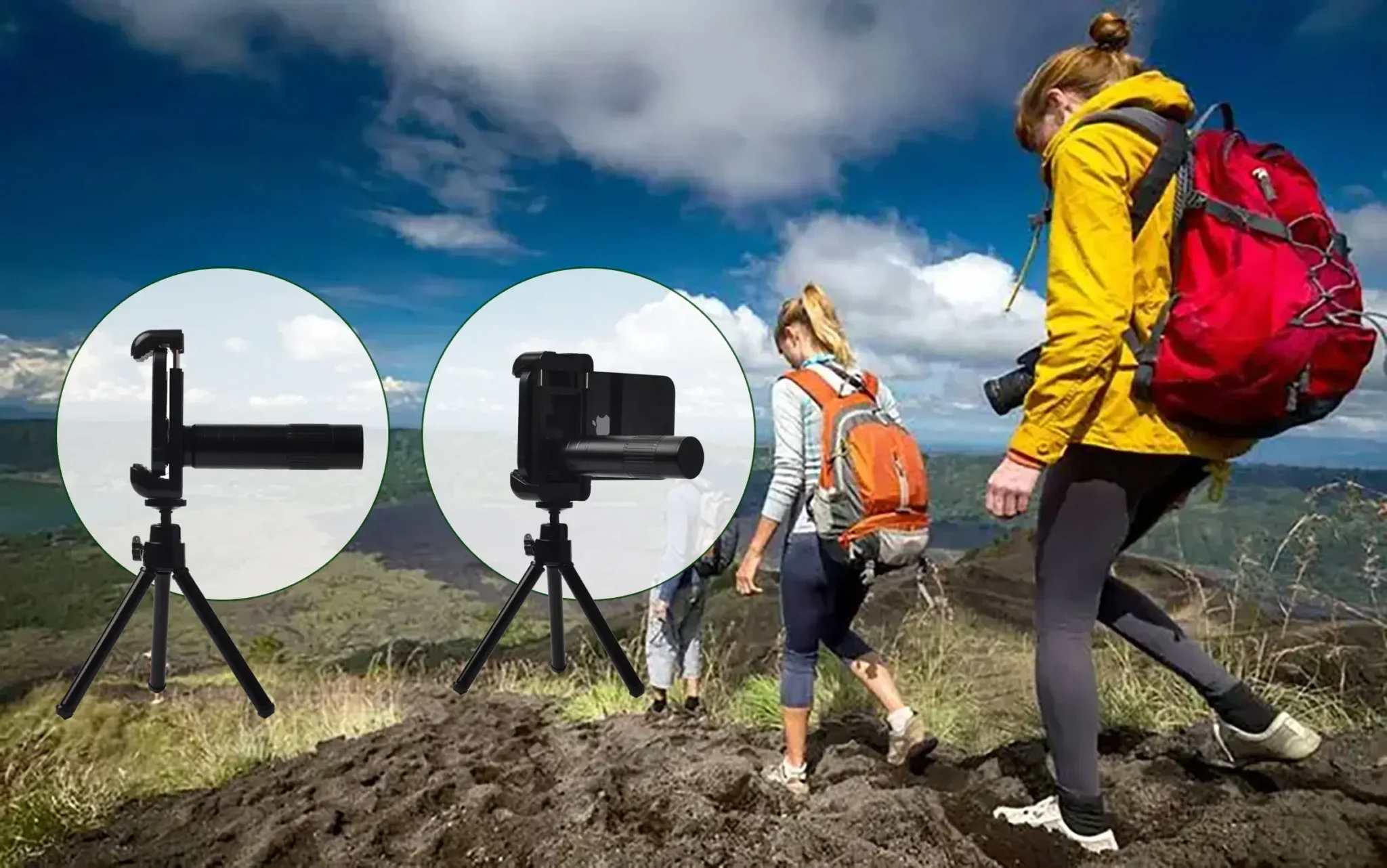
A smartphone lens add-on pairs with a tiny sensor and a short optical path. This makes control of reflections even more vital. A weak coating can soon cause haze at the edges. It might lead to blooming highlights and lost contrast under street lamps or direct sun. That is why add-ons for telephoto, wide-angle, and macro in smartphones gain from strong AR and multi-layer coatings. Hemusun’s mobile lens and filter range fits right in this area. Portability counts here. But image results must still work well in daily life.
Longer light paths open more chances for internal reflection. In telephoto lenses and monoculars, coating quality appears in far-off details. It shows in control of bright edges and use in low light. Hemusun’s monocular products also stress multi-layer optical coating and image stabilization. This mix helps. Stabilization adds steadiness. Meanwhile, coating keeps light and contrast intact.
Wide-angle setups direct light into the system at sharp angles. This sets tougher conditions for reflections, mainly near the edges. Coating does not fix every problem alone. But poor coating in a wide-angle lens shows up fast. It often appears in sky views, window shots, or night streets.
Macro shots uncover small texture gaps. Any layer of stray light cuts the clear split needed for close details to pop. So, coating quality counts in close-up imaging just like it does for far views.
Do not judge a coating just by sales terms. The true gap often comes from careful process handling.
Top optical systems treat coating as one part of a full chain. That chain includes lens cutting, grinding, polishing, coating, cleaning, assembly, and checking. If polishing leaves flaws on the surface, or if assembly adds dirt, even a good coating plan cannot fully fix the image. Hemusun’s making skills cover the whole optical process. This goes from rough and fine grinding to polishing, coating, gluing, black coating, cleaning, assembly, and quality checks. They have custom machining know-how for over 5000 types of lenses across more than ten years.
For OEM buyers, the main reviews often cover:
These factors hold as much weight as the lens plan on paper.
For brands, sellers, and project buyers seeking a reliable supplier of quality optical goods, Hemusun Optical Instrument Co., Ltd. handles optical research, making, sales, and custom work. Its products include telescopes, monoculars, spotting scopes, mobile lenses and filters, microscopes, rangefinders, night vision devices, magnifiers, and other optical tools. The firm also offers OEM, ODM, wholesale, and custom optical part services. This comes with a production line that includes grinding, polishing, coating, assembly, and checks. Such a setup aids buyers who want more than basic buying. They seek steady help for medium- to high-accuracy optical tasks.
Lens coating is not a minor extra at the close of optical planning. It ranks as a chief cause why two lenses of similar size or zoom level act so differently in actual use. A well-coated optical lens lets more helpful light through. It trims flare and ghosting. It holds contrast firm. And it delivers purer color in tough light. In smartphone lens add-ons, monoculars, telescopes, and custom OEM optics, coating quality often sets if the end image looks just okay or truly sharp.
The chief gain of optical lens coating is less surface reflection. This boosts light passage. As a result, image results appear brighter, cleaner, and richer in contrast.
Yes. AR coating cuts reflected light at the lens surface. This lowers glare and ghosting. In real use, it often means stronger contrast, clearer highlights, and steadier work in scenes with light from behind.
In most photo tasks, yes. A multi coating lens handles reflection over a wider light color range. It also works under more light entry angles. This typically brings better fight against flare and more uniform image results.
Smartphone lens coating counts because small optics and tiny sensors react strongly to stray light. Good smartphone lens coating cuts edge haze, flare, and contrast drop. This helps especially in night shots or bright sun.
OEM buyers should review coating evenness, toughness, stickiness, light passage, and group steadiness. It pays to see if the supplier manages the full optical steps. That includes polishing and coating to assembly and checks.