
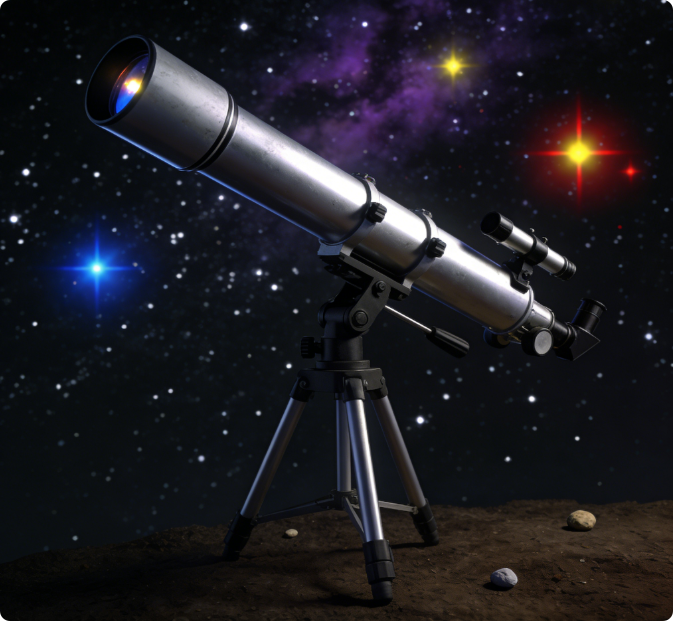
Search “best beginner telescope” in 2025–2026 and the advice feels endless. In practice, most first purchases succeed for the same reasons: the view is bright enough to be rewarding, the setup is easy enough to repeat, and the mount is steady enough that focusing isn’t a fight. This guide uses a simple framework built around telescope aperture, optical structure, and the mount or base.
Most beginners don’t quit because Saturn is “too small.” They quit because the telescope is awkward to carry, takes too long to set up, or shakes every time the focus knob is touched. A beginner astronomy telescope should reach first light quickly, feel stable at normal magnification, and store without drama.
With that in mind, choose aperture first, then optical design, then the mount.
Aperture is the diameter of the main lens or mirror. Bigger aperture gathers more light and resolves finer detail, but it adds weight and demands a sturdier mount.
Light gathered scales with aperture area, so it grows with the square of diameter. Moving from 80 mm to 130 mm collects about 2.6 times more light. On bright clusters and many nebulae, that difference is clear. On planets, extra aperture can help, but seeing conditions and mount stability often become the limit on a typical night.
Magnification is only useful when the image stays sharp and steady. A smaller beginner telescope on a rigid mount can beat a larger tube on a shaky tripod at the same “power.”
For many beginners, a refractor around 70–90 mm or a reflector around 114–150 mm is a practical zone. It can show crisp lunar detail, planetary features on good nights, and a meaningful set of bright deep-sky objects without becoming too heavy to move.
City light pollution also changes what feels “worth it.” In bright areas, the Moon, planets, and double stars remain strong targets, while many faint objects wash out. A portable telescope that gets taken to darker skies can outperform a larger telescope that rarely leaves home.
After aperture, the refractor vs reflector telescope question is about daily friction: how quickly the scope is ready, how much upkeep it needs, and what it favors.
Refractors use lenses. They are popular as a beginner telescope for kids and families because they feel predictable: point, focus, observe. Many hold alignment well and suit short sessions. The trade-off is cost per aperture and, at entry levels, possible color fringing on very bright objects. For mixed use that includes daytime viewing, refractors often fit naturally.
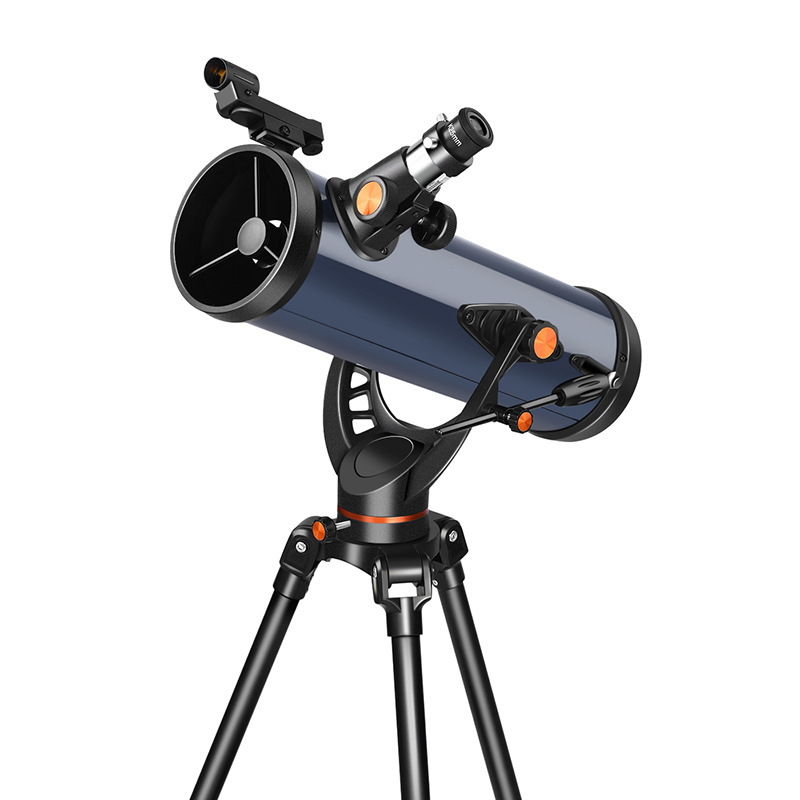
Reflectors use mirrors, often a Newtonian layout. The appeal is simple: more telescope aperture for the budget, which helps on brighter deep-sky objects and supports better planetary resolution when conditions allow. The trade-offs are basic collimation and temperature stabilization. Collimation is a learnable adjustment, but beginners should expect it as routine care.
Compact compound designs fold the light path, giving a long focal length in a shorter tube. This can be convenient for storage and travel and can suit lunar and planetary viewing. The trade-offs are a narrower field of view and cooldown behavior. For wide-field scanning and star-hopping, many beginners still find shorter systems easier.
A beginner telescope is a system. The phrase telescope mount for beginners matters because stability is what turns a spec sheet into an enjoyable night outside.
Alt-az mounts move up-down and left-right. They are intuitive and fast to set up, which suits weeknight observing. A Dobsonian mount is a sturdy alt-az base built for reflector tubes, and it remains popular because it delivers real stability for the cost. For sharing views, a steady base reduces the “lost target” problem and makes focusing much less frustrating.
Equatorial mounts can track smoothly after alignment, which helps long planetary sessions and entry-level imaging, but they add setup steps and balancing. GoTo systems can speed up target finding under light pollution, but they need power and an alignment routine. For many first-time buyers, a simple manual setup gets used more often. For buyers who prefer guided target finding, GoTo can be worth it if the mount is solid.
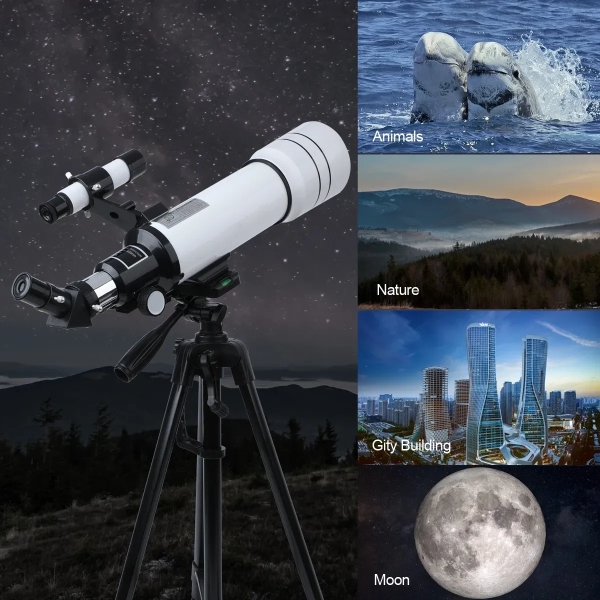
Apartment balcony setups usually reward compact size and quick setup. Backyard family viewing rewards stability and comfortable eyepiece positions. Camping setups reward fast packing and a mount that handles uneven ground. Moon-and-planet viewing rewards steady tracking and thermal stability more than extreme magnification. Deep-sky beginners benefit most from aperture plus darker skies and realistic expectations.
Hemusun Optical Instrument Co., Ltd. positions itself as an optical instruments supplier with in-house research, manufacturing, and sales capabilities. Its website describes a full manufacturing flow that covers optical fabrication and coating, assembly, inspection, and packaging, supported by quality management and after-sales service. The product scope shown on the site includes astronomical telescopes as part of a broader portfolio of observation and optical categories.
For buyers and distributors who require custom specifications, the company also describes customisable services for optical components, including machining and coating processes, and references an ISO9001-based quality system with precision test equipment used for parameter control. This combination can be relevant for B2B procurement scenarios where consistency, documentation, and repeatable QC standards are as important as headline performance.
A beginner astronomy telescope should be chosen as a system. Aperture sets the ceiling for brightness and detail. Optical structure decides how the telescope behaves and how much upkeep it needs. The mount or base decides whether observing feels smooth or frustrating. When those three pieces match real space and real habits, the telescope gets used, skills grow quickly, and the night sky becomes familiar.
Aperture controls brightness and detail, but only when the mount is stable and the telescope is used often. Many beginners succeed with moderate apertures that are easy to carry and mount steadily, then move up once routine and storage are solved.
Refractors tend to be low-fuss and quick to use. Reflectors often provide more aperture for the budget but may need basic collimation and cooling time. The easier option depends on whether simplicity or aperture value matters more.
High magnification demands sharp optics, steady air, and a rigid mount. If the mount shakes or the telescope is pushed beyond useful power, the view becomes dim and soft. Moderate power with good stability usually shows more.
Yes for visual observing. A Dobsonian mount is stable and intuitive to point, and it is often easier to share than a lightweight tripod because it reduces wobble and keeps targets easier to follow.
Manual setups are simple and great for short sessions. GoTo can help find targets under light pollution, but it needs power and alignment steps. The better choice depends on routine and patience for setup.